
Small businesses are the engine of the U.S. economy. They account for 99.9% of all businesses and employ 61.6 million people, nearly half the private workforce (U.S. Small Business Administration (SBA), 2023). That means one out of every two people working in the private sector depends on a small business for their paycheck. For Black and Brown entrepreneurs, small business ownership is not just about profit — it’s about power, self-determination, and legacy. But the political climate is shifting, and so is the support structure many small businesses rely on.
What’s Changing Under Trump-Era SBA Policies?
During and after the Trump Administration, efforts were made to cut SBA funding by up to 35% (Congressional Budget Office, 2020). This impacts programs like the 7(a) Loan Program, which helps businesses access working capital, and the 504 Loan Program, which supports commercial real estate purchases. These are critical to small businesses, especially first-gen and under-capitalized entrepreneurs.
Grants and community development funds have also faced scrutiny. While the Trump-era Opportunity Zones program aimed to direct investment into underserved areas, critics argued that it often benefited wealthy developers more than local entrepreneurs (Urban Institute, 2020). These shifts signal a broader trend: small business support is becoming less predictable and more politically driven.
Example: A Black-owned beauty supply store in Atlanta secured a 7(a) loan to expand its inventory and storefront. If that funding were slashed, expansion wouldn’t happen — and survival in a competitive market becomes harder.
While initiatives like Opportunity Zones were marketed as revitalizing low-income neighborhoods, research found that developers — not small business owners — reaped most of the benefits (Urban Institute, 2020).
The Ripple Effect on Everyday Entrepreneurs
Less funding and fewer grants mean fewer approvals, stricter requirements, and more hoops to jump through. In 2023, only 49% of small business loan applications were fully approved, and approval rates for Black-owned businesses were significantly lower (Federal Reserve, 2023). This signals a larger issue: systemic financial gatekeeping that disproportionately affects entrepreneurs of color.
This instability disproportionately affects minority-owned businesses. According to the Brookings Institution (2022), Black-owned businesses are more likely to be sole proprietorships, undercapitalized, and overlooked by traditional lenders. If SBA funding tightens, the barriers to entry — and survival — only grow.
Example: A Latina entrepreneur in Houston launched a catering business. When she applied for a loan to buy a commercial kitchen, her approval was delayed — then denied due to tightened SBA regulations. Without backup funding options, she had to scale down operations and delay hiring. Her dream didn’t stop, but it slowed.
This isn’t just red tape — it’s real consequences for real people.
How Small Businesses Can Pivot in Uncertain Times
Here’s the hard truth: government support can’t be the only strategy. In a politically unstable environment, resilience has to come from within — and from the community. Government support may be inconsistent, but that doesn’t mean entrepreneurs are powerless. Here’s how to stay agile:
1. Diversify Funding Sources
Entrepreneurs should seek alternative financing: community development financial institutions (CDFIs), crowdfunding, peer-to-peer lending platforms, and grants from private foundations and corporations focused on equity. Look beyond the SBA. Tap into:
- Community Development Financial Institutions (CDFIs)
- Crowdfunding platforms like Kickstarter or IFundWomen
- Corporate grant programs (e.g., SheaMoisture Fund, Comcast RISE)
- Smart Finance Partners: A resource for small businesses exploring loans, credit cards, and lines of credit.
Example: A wellness coach in Detroit launched a group coaching program with funds raised on GoFundMe, then secured a CDFI microloan to rent a studio space. She later used Smart Finance Partners to explore a line of credit to stabilize cash flow.
2. Form Strategic Alliances
Partnering with other local businesses to share resources, cross-promote, and reduce overhead can help weather lean times. Partner with other businesses to reduce costs and widen reach.
- Share vendor contacts, spaces, or marketing efforts.
- Host joint pop-up events or cross-promotions.
Example: A Black-owned coffee shop in D.C. partnered with a local bookstore for monthly “Lit & Latte” nights. Both businesses shared foot traffic and grew their audiences. The event became so successful it caught the attention of a local magazine, boosting their reach even further.
3. Go Digital or Go Home
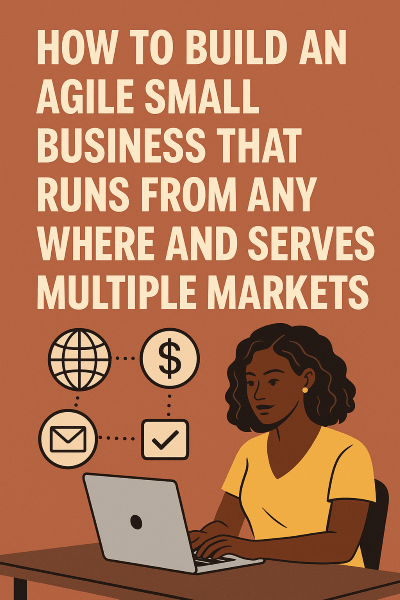
Businesses with digital operations — online stores, virtual consultations, digital marketing — are better equipped to adapt. Use tech to expand your reach beyond local limits. Tech isn’t optional — it’s essential.
- Set up e-commerce.
- Automate bookings, orders, and payments.
- Build an email list and leverage social media for direct-to-consumer engagement.
Example: A handmade jewelry brand that relied on weekend markets switched to Shopify and grew online sales by 300% after optimizing their site and launching TikTok ads. The owner, a single mom in Chicago, now ships nationwide and hired two part-time assistants.
4. Stay Politically Aware — and Active
Entrepreneurs must understand how local and federal policies affect their bottom line. Join business associations, attend town halls, and support policy advocates fighting for equity in small business.
Example: A coalition of Black-owned businesses in Oakland successfully lobbied the city council to increase local procurement from minority-owned vendors. They formed a group chat, scheduled city meetings, and even brought customers along to speak in support.
How Communities Can Support Small Business
The government might pull back — but the people don’t have to. Government policy might shift, but community power is steady — if we use it. Here’s how we can support each other:
- Shop local, often, and loudly: Don’t just buy once — become a regular and tell your network.
- Buy Local, Buy Black: Encourage consistent support for local businesses, especially in underserved communities.
- Invest in local businesses: Consider micro-investments or backing crowdfunding campaigns.
- Skill Sharing: Business owners can host workshops, offer internships, or mentor new entrepreneurs in their area.
- Create Local Coalitions: Form neighborhood alliances or join existing ones to collectively push for policy that benefits small business.
- Mentor or volunteer: Share your time, skills, or experience with a rising entrepreneur.
Example: A retired accountant in North Carolina offers free tax workshops to Black-owned startups every quarter — helping dozens of entrepreneurs stay compliant and focused on growth. One of her mentees recently opened a second storefront and now does the same for others.
The Bottom Line: Don’t Wait. Move Smart. Move Together.
SBA cuts and political shifts are real — but so is your power to adapt. It’s time to think bigger than the barriers.
If you’re an entrepreneur, explore new ways to fund your vision. Find your tribe. Lean into digital. Join local business coalitions and make noise where policy is made.
If you’re a community member, support your local shops. Share their posts. Invest, mentor, show up. Every action counts.
Together, we can rewrite what success looks like in our communities. Small businesses have always made big moves under pressure. The ones who survive 2025 will be those who stay nimble, build smart, and stick together.
References
Brookings Institution. (2022). Building supportive ecosystems for Black-owned U.S. businesses. https://www.brookings.edu/articles/building-supportive-ecosystems-for-black-owned-u-s-businesses/
Congressional Budget Office. (2020). An analysis of the president’s 2021 budget. https://www.cbo.gov/publication/56335
Federal Reserve. (2023). Small business credit survey: Report on employer firms 2023. https://www.fedsmallbusiness.org
Urban Institute. (2020). An early assessment of Opportunity Zones for equitable development projects. https://www.urban.org/research/publication/early-assessment-opportunity-zones
U.S. Small Business Administration. (2023). 2023 Small Business Profile. https://advocacy.sba.gov


 Melanated Mogul
Leave a comment